
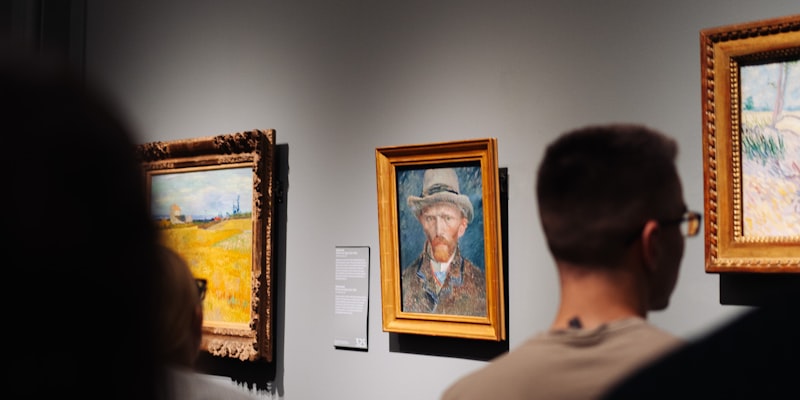
The Palais des Beaux-Arts de Lille is far more than a museum: it is a monument to culture and art. Regarded as the second largest fine arts museum in France after the Louvre, it houses exceptionally rich collections spanning centuries of artistic creation. A journey into a cultural treasure that is the pride of the capital of Flanders.
A palace in the heart of the city
Located on the Place de la République, in the very centre of Lille, the Palais des Beaux-Arts occupies an imposing Belle Époque building inaugurated in 1892. Its majestic facade, adorned with columns and allegorical sculptures, immediately signals the grandeur of the collections within. The building itself is a work of art, with its luminous galleries, monumental staircases and central atrium that bathes the works in magnificent natural light.
Following a major renovation completed in 1997, the museum was restored to its full splendour. The exhibition spaces were redesigned to offer a smooth and enjoyable visitor experience, while new underground galleries house the collections of relief maps and ceramics. A visit to the Palais is an immersive experience that appeals to seasoned art enthusiasts and casual visitors alike.
Exceptional collections
The collections of the Palais des Beaux-Arts de Lille are remarkably diverse. The painting department, the most celebrated, brings together major works of European painting from the 15th to the 20th century. Visitors can admire canvases by Rubens, Van Dyck, Goya, Delacroix, Courbet and Monet, to name but a few. The Flemish painting section is particularly rich, reflecting the history and cultural identity of the region.
The sculpture department presents works ranging from Antiquity to the modern era, including pieces by Rodin and Camille Claudel. The ceramics collection, housed in the basement, offers a fascinating panorama of European ceramic production, with particular attention to Delft faience and French porcelain.
The relief maps: a unique treasure
One of the most fascinating curiosities of the Palais des Beaux-Arts is its collection of relief maps. These scale models of fortified towns, created in the 17th and 18th centuries for military strategic purposes, are true masterpieces of precision and miniature craftsmanship. The relief map of Lille, dating from 1743, allows visitors to visualise the city as it once was, with its fortifications and its Vauban Citadel.
These models, displayed in the vast underground galleries of the museum, provide a unique record of military architecture and urban planning from centuries past. They help visitors understand how the towns of northern France developed and how military engineering shaped the regional landscape.
Temporary exhibitions
The Palais des Beaux-Arts regularly hosts ambitious temporary exhibitions that attract audiences from across France and Europe. These exhibitions explore a variety of themes, from the great masters of painting to contemporary artistic movements. They often benefit from exceptional loans from major international museums, confirming the Palais's influence on the European cultural scene.
The museum also actively participates in major Lille cultural events, notably Lille 3000, by hosting exhibitions linked to the theme of each edition. This synergy between the museum and metropolitan events helps to constantly renew public interest.
Practical information for your visit
The Palais des Beaux-Arts is open from Monday to Sunday, closed on Tuesdays. It is easily accessible by metro (République - Beaux-Arts station) or on foot from the Grand'Place in about ten minutes. Themed guided tours are offered throughout the year, and educational workshops allow children to discover art in a fun and engaging way.
The museum has a well-stocked bookshop-boutique and a pleasant café for a break between galleries. During the Lille Braderie, the Palais generally offers extended opening hours and special rates, providing visitors with a welcome cultural alternative between browsing sessions. Also discover the other must-visit museums in Lille to complete your cultural itinerary.