
Lille, France's fourth-largest city, possesses a thousand-year history shaped by its strategic position at the crossroads of major European routes. Successively Flemish, Burgundian, Spanish and then French, the city has drawn on each of these influences to become the cosmopolitan metropolis we know today. Here are 10 dates that have shaped its destiny.
640: The legend of Lyderic and Phinaert
The legendary founding of Lille dates back to 640, with the tale of Lyderic, a prince abandoned at birth, who slew the giant Phinaert to reclaim his lands. This legend is still celebrated through the giants of the Braderie and popular festivities.
1066: First mention of "l'Isla"
The name of Lille appears for the first time in a charter of the Count of Flanders Baldwin V, in the form "Isla", meaning "the island", in reference to the city's position on an islet of the Deuˆle river. The settlement was then a prosperous trading town.
1237: Foundation of the Hospice Comtesse
Countess Jeanne of Flanders founded the hospital that would become the Musée de l'Hospice Comtesse, one of the finest testimonies of medieval Lille. This period saw Lille become a great cloth-making city, rich and powerful.
1369: Lille under the Dukes of Burgundy
Through the marriage of Margaret of Flanders to Philip the Bold, Lille came under the authority of the Dukes of Burgundy. A golden age of culture and economics followed. The Palais Rihour, built by Philip the Good, bears witness to this Burgundian grandeur.
1667: The conquest by Louis XIV
After a nine-day siege, Louis XIV captured Lille from the Spanish. The city became definitively French by the Treaty of Aix-la-Chapelle in 1668. The Sun King commissioned Vauban to build the Citadelle, a masterpiece of military architecture, and considerably expanded the city.
1890: Charles de Gaulle is born in Lille
On 22 November 1890, Charles de Gaulle was born at 9 Rue Princesse, in the Vieux-Lille. The birth house is now a museum dedicated to the youth of the future general and President of the Republic.
1858: The annexation of neighbouring communes
Lille absorbed the communes of Wazemmes, Esquermes, Fives and Moulins, quadrupling its area and doubling its population. The Wazemmes quarter still retains its own identity today.
1993: The arrival of the TGV and Eurostar
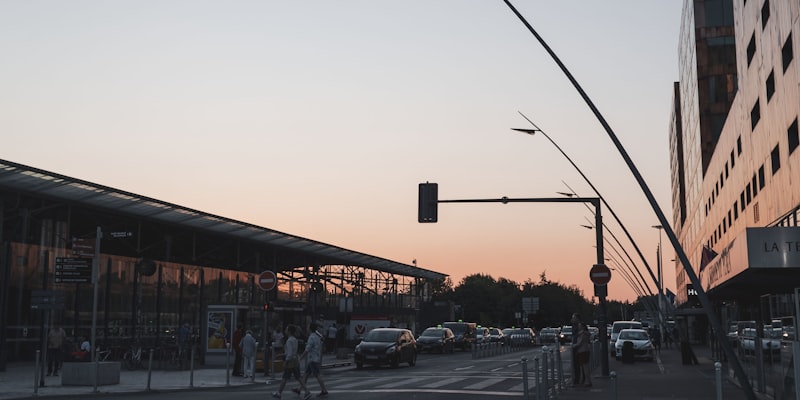
The opening of Lille-Europe station and the arrival of the TGV Nord and Eurostar placed Lille at the heart of the Paris-London-Brussels triangle. This rail connection radically transformed the city's economy and image, launching the Euralille business district.
2004: Lille, European Capital of Culture
The year 2004 marked a major turning point. Lille was designated European Capital of Culture, attracting millions of visitors and revealing its creative dynamism to the world. From this adventure was born Lille 3000, which continues the cultural momentum.
2020-2025: Lille, a 21st-century metropolis
Today, Lille continues its transformation with major urban development projects, a vibrant cultural scene and economic dynamism driven by digital technology and innovation. The Lille metropolitan area is establishing itself as one of the major hubs of north-west Europe.